
Fellows 2026-2027
A full list of publications and presentations from CSLS Fellows is available here

Ilia Afanasev
University of Vienna, Austria
Mentor: Ellen Contini-Morava
The project, inspired by the variation of the czas prszyszły zlożony (compound future tense) forms within the modern spoken standard Polish, delves into the meaning of -ć-, traditionally called an infinitive (as in Niepokalane domy będą błyszczeć w słońcu ‘Immaculate homes will sparkle-ć in the sun.’). The study argues that the meaning of -ć- is narrowness of the time frame, and demonstrates it, using the example of A. Kuśniewicz’s Król Obojga Sycylii.

Emmanuel Bawa
City University of New York, Graduate Center
Mentor: Nancy Stern
Research project: Conditional in New Testament Greek.
This research is an initial attempt to apply the CS framework to three forms in Greek, εἰ, ἐάν, άν in the New Testament, focusing on the writings of John (Gospel of John, 1st, 2nd, and 3rd Letters of John, and book of Revelation). These forms have been described as conditionals, but they contribute to a variety of other messages as well. This preliminary research seeks to account for the distribution of these particles using the Novum Testamentum Graece (Greek New Testament) as a primary source.
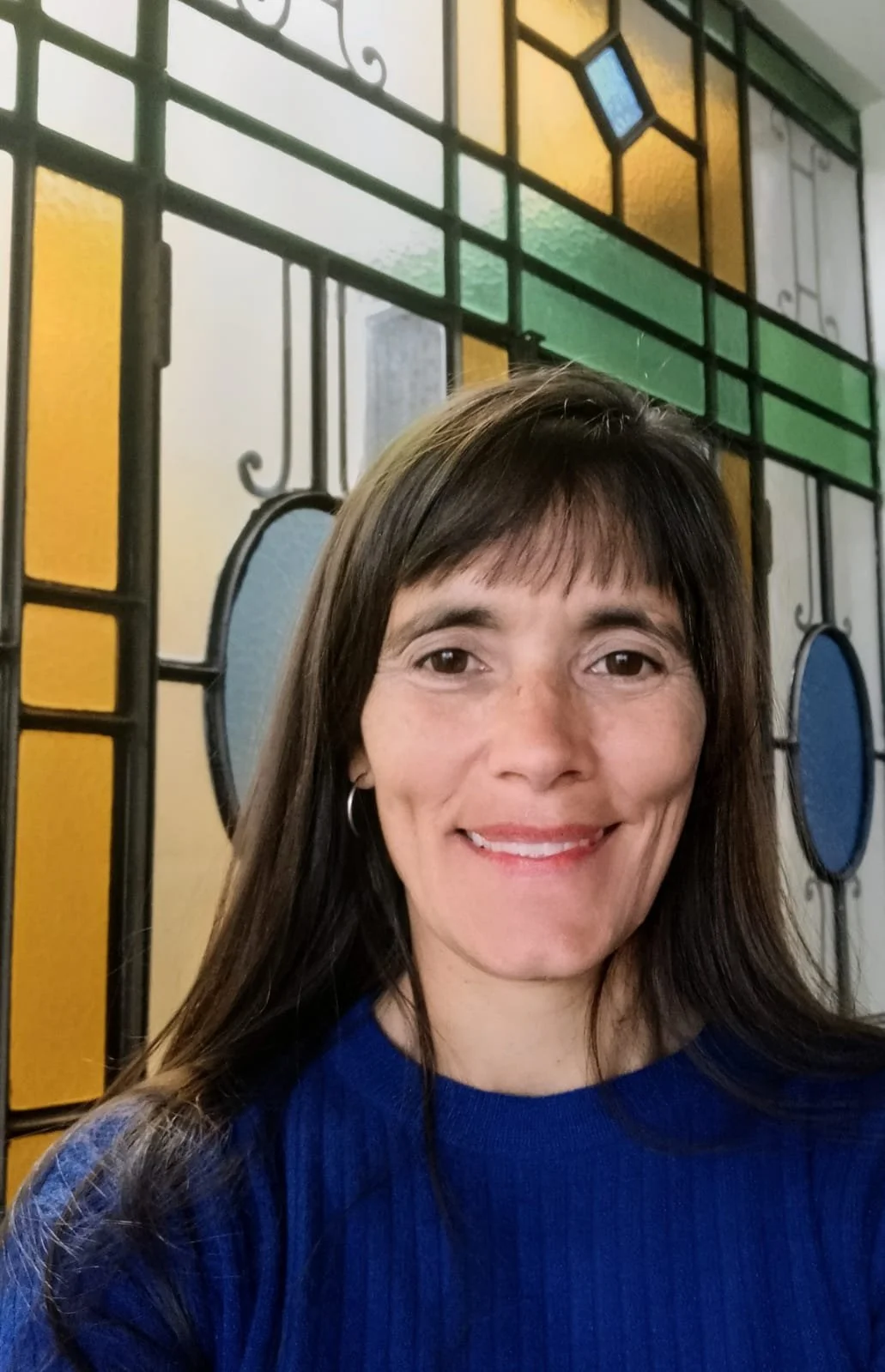
Fiorella Magri
Universidad de la Plata, Argentina
Mentor: Ludmila Novotny
Fiorella Magri is an Argentinian scholar based in the city of La Plata, Argentina. She holds a teaching degree in English from the National University of La Plata (UNLP), where she is also currently pursuing a teaching degree in Portuguese. She also holds a Master’s degree in Linguistics from the same university. She has been teaching English Grammar 1 and English Language 1 at this institution since 2003.
Fiorella was born in the province of Misiones, which borders both Brazil and Paraguay. This geographical position constitutes an important part of her linguistic background and has contributed to her long-standing interest in Brazilian Portuguese. Specifically, her current research focuses on the “definite article” in that language.
The project grew out of her observation of the use of o/os/a/as in contexts where the “nominal” (entity) is already defined, restricted, or unique - functions traditionally associated with these signals. Working with data from the crônica, a journalistic genre focused on everyday topics, Fiorella aims to formulate a meaning hypothesis that can account for the distribution of o/os/a/as.
Outside her academic work, Fiorella enjoys gardening, reading, and spending time with her three children, her husband and friends.

Ludmila Novotny
Universidad nacional de la Plata, Argentina
Mentor: Nancy Stern
Ludmila Novotny is a Certified English-Spanish Translator and researcher based in the City of Buenos Aires, Argentina. She holds a degree in Literary and Technical-Scientific Translation from the Instituto de Enseñanza Superior en Lenguas Vivas “Juan Ramón Fernández,” a degree in Legal Translation from the Pontificia Universidad Católica Argentina, and a Master’s Degree in Linguistics from the Universidad Nacional de La Plata. In addition to working as a translator and conducting her own research, Novotny works as a research assistant for a project at Osnabrück University (Germany).
In her master’s thesis, Novotny has successfully accounted for the distribution of the English form through based on a monosemic analysis of that form, guided by the principles of the Columbia School framework and using qualitative and quantitative methods. In her current research project, she adopts the same theoretical and methodological approaches with the aim to account for the distribution of the Mapudungun word pu. This form has been traditionally proposed to have two, unrelated meanings. Novotny’s proposal is that the distribution of pu in authentic discourse may be better explained by a single, invariant meaning.
In her free time, Novotny enjoys singing, practicing yoga or just relaxing at home with her husband, son and two cats.

Tanisha Pandey
University of Bern, Switzerland
Mentor: Nancy Stern
Tanisha is a first year fellow who is looking at the distribution of the form they, in particular its use for singular referents. She is studying the frequency and distribution of the form to investigate whether they signals a Number meaning. It's possible that the information on the number of referents implicated by theyis inferred by the reader from the context of the form’s use and is not indicated by the form itself. The study aims to investigate this hypothesis using short stories published in the The New Yorker as its data set, and will include both qualitative and quantitative analysis.
This work builds up on previous works conducted in Columbia School (including Stern 2019), and takes inspiration from Lavendera (1978), García (1985) and Otheguy & Shin (2021) to bring Columbia School linguistics in dialogue with social queries into language use, and vice-versa.
Tanisha was born in and finished high school in India and is currently pursuing her masters in Sociolinguistics at the University of Bern, Switzerland and lives in Hamburg, Germany.
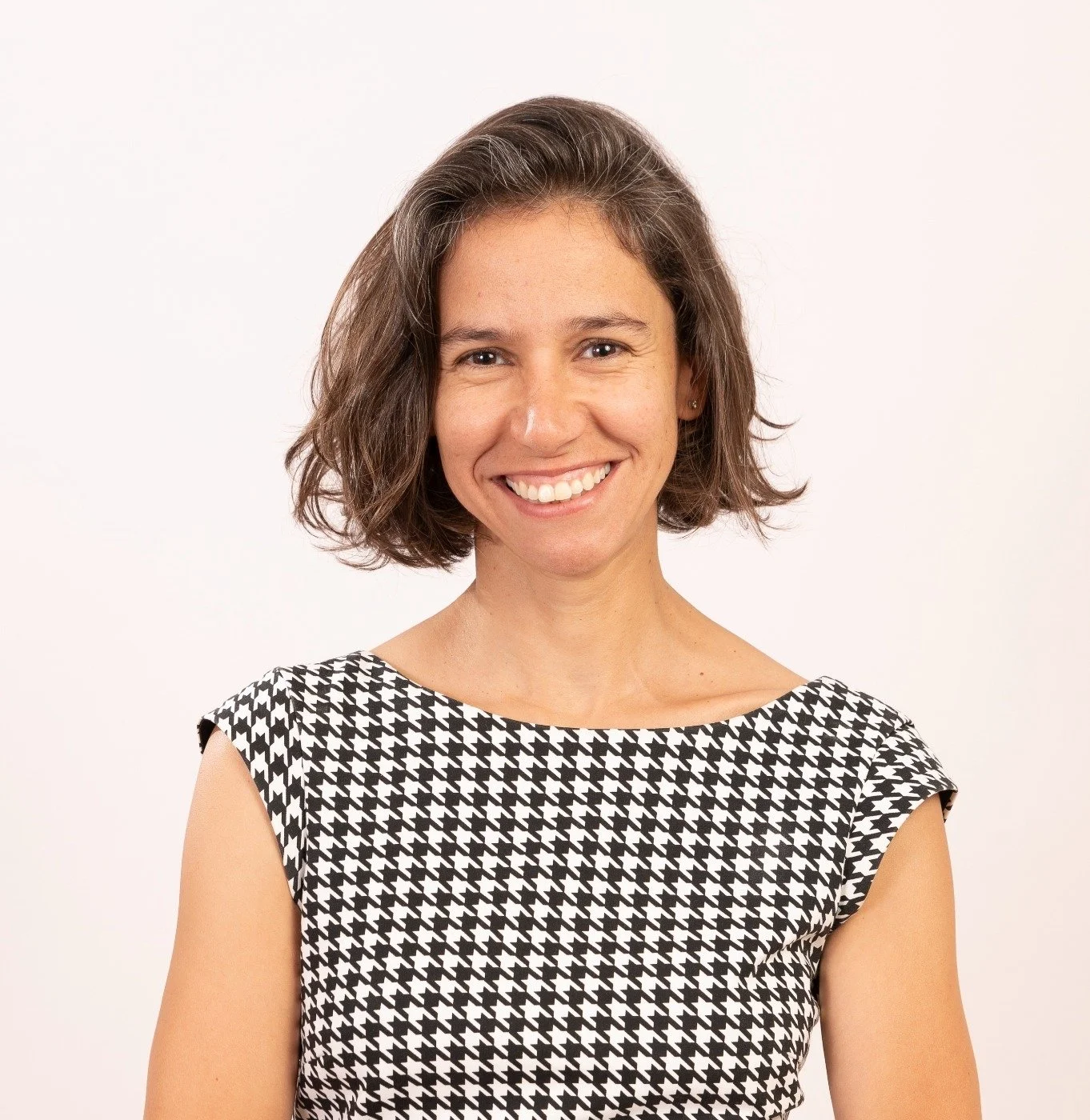
Yliana V. Rodríguez
University of the Republic, Uruguay
Mentor: Bob de Jonge
Yliana holds a Ph.D. in Linguistics from Leiden University and currently an Assistant Professor at the Universidad de la República, Uruguay, where she works across the Faculty of Psychology and the Faculty of Humanities and Educational Sciences.
Her fellowship project, A Columbia School Analysis of the Address Signals tú and vos in Montevideo Spanish, investigates the variable use of the two singular address forms in a speech community where both coexist. Moving beyond accounts that treat their distribution primarily in terms of formality or social categories, the study examines the invariant meanings signaled by tú and vos and the communicative factors that motivate speakers’ choices in authentic discourse. More broadly, it seeks to show how Columbia School theory can contribute to the study of sociolinguistic variation.
Outside linguistics, Yliana can usually be found swimming, cycling, planning an adventure, or exploring the world with her favorite person in it.

Daan van Soeren
Universiteit van Amsterdam, Netherlands
Mentor: Bob de Jonge
Daan van Soeren recently completed his PhD at the University of Groningen, under the auspices of the Columbia School Linguistic Society. In his dissertation, he compared the distribution of consonants in Spanish, English and Dutch CVCVC(V) words; the results show a word-initial favouring of labials and a word-final favouring of coronals. He’s currently continuing his scholarship as a postdoctoral Fellow at the Society to compare his earlier findings (in Indo-European languages) to data from Guaraní and Mapudungún, two unrelated indigenous languages spoken in South America.